

People are more likely to quit with some friendly support


Adult and teenage smokers are under-served by a focus on long-term health harms, so helping them realise tangible short-term gains, while encouraging them to get the support of a ‘Quit Buddy’, can make all the difference.


Client
Stop Smoking Services for Warwickshire County Council’s and Coventry City Council
The brief
Undertake research into the needs, experiences and perceptions of adults and young people who smoke. Make recommendations for service enhancements based on the available evidence around behaviour change.
Key insight
Putting more emphasis on immediate wins and peer support can make a real difference. Having a ‘Quit Buddy’ along for the journey can increase the chances of quitting for good.

The combined Stop Smoking Services of Coventry City Council and Warwickshire County Councils commissioned Social Engine to undertake research to develop a more detailed understanding of the people using the services, while also exploring opportunities for service improvements based on behavioural science.
The team conducted a wide range of research methods, from a literature review, survey, focus groups and interviews with service users, through to engaging with a range of professionals audiences, including Stop Smoking Service staff through to people involved in secondary support services, such as pharmacies, health centres GPs.
The results were shared with a project board of professionals from both Councils, who then worked with the Social Engine team in a co-creation workshop to evaluate and model some potential new approaches.
A recognised values framework
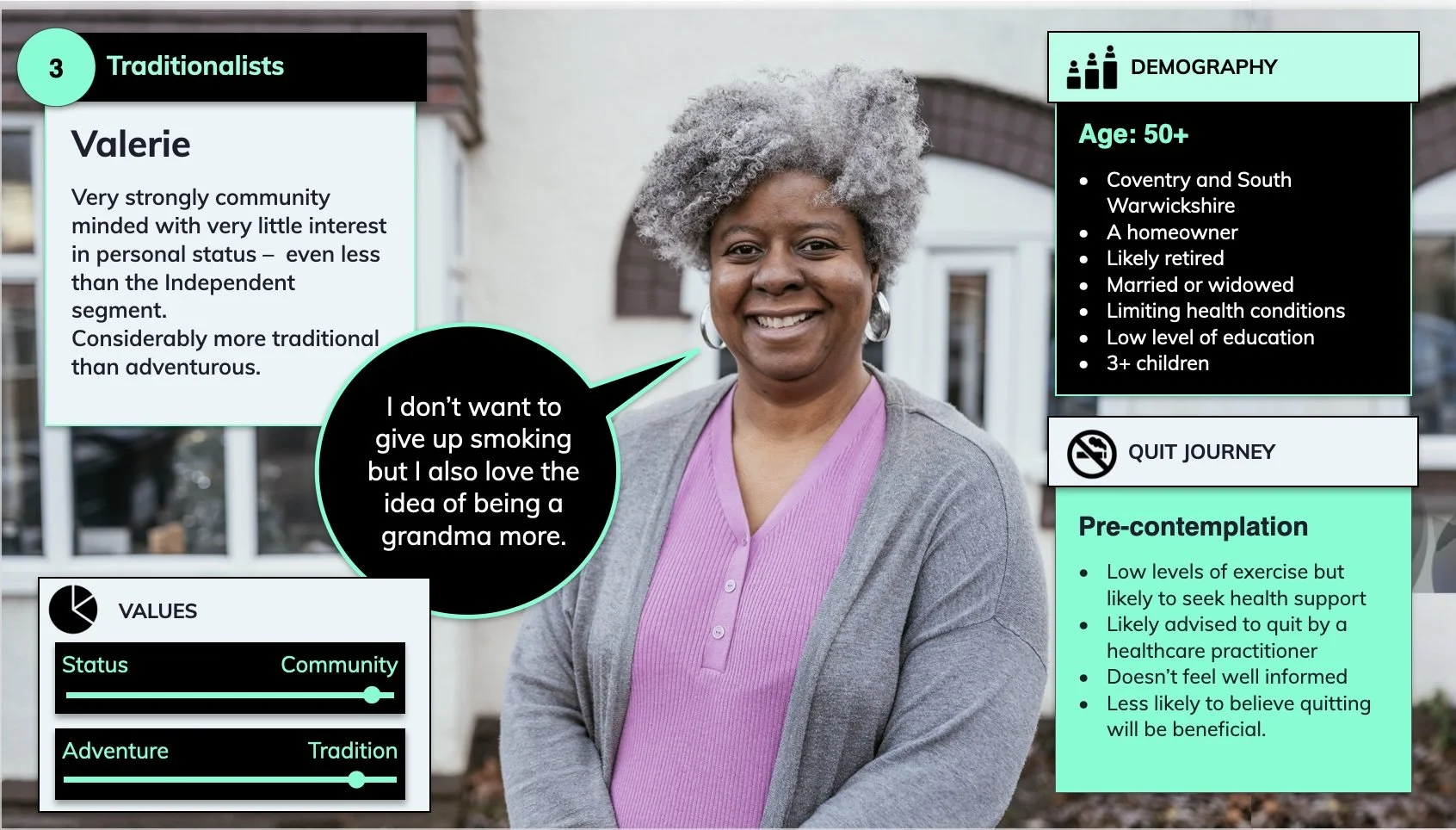
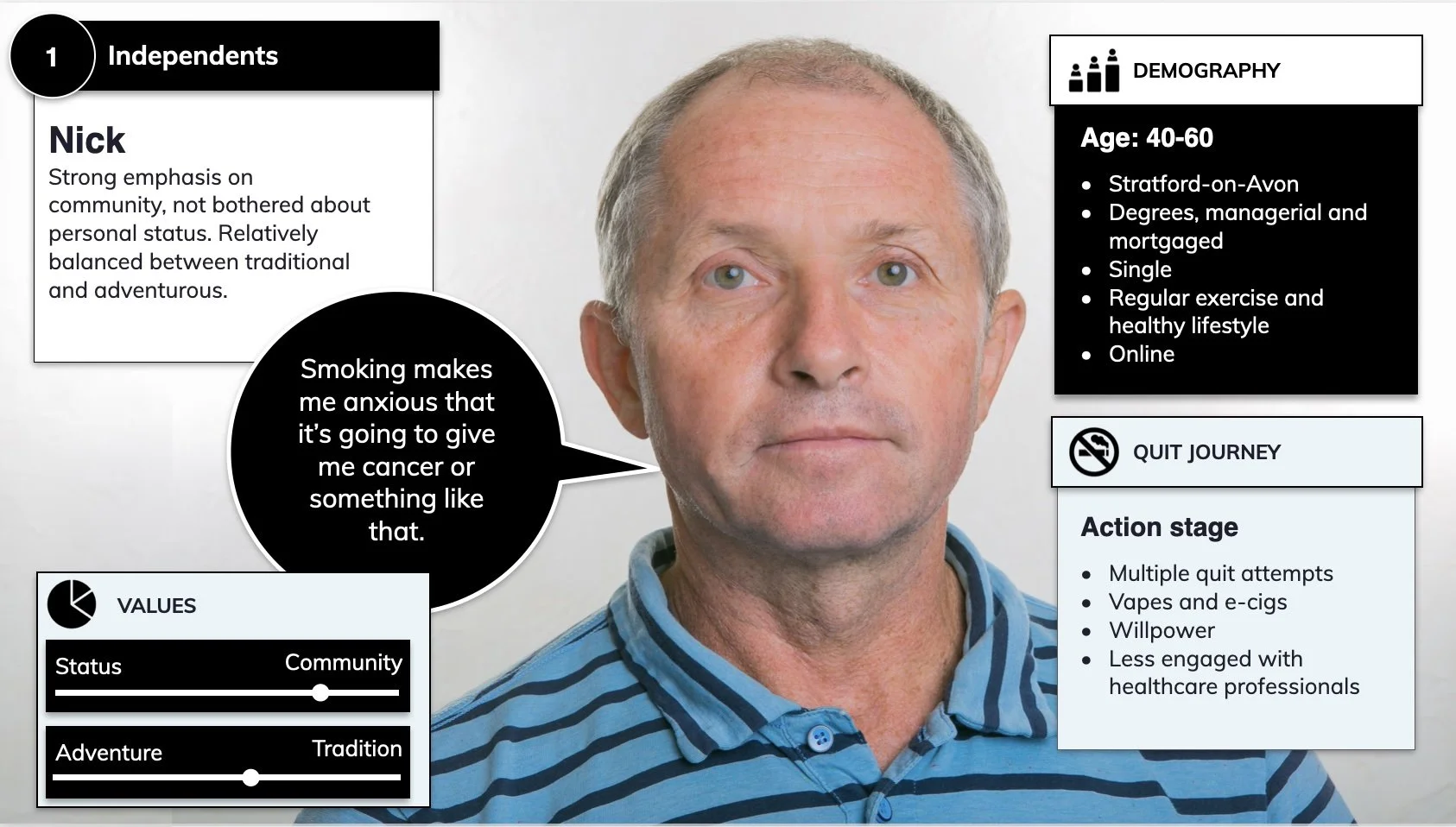
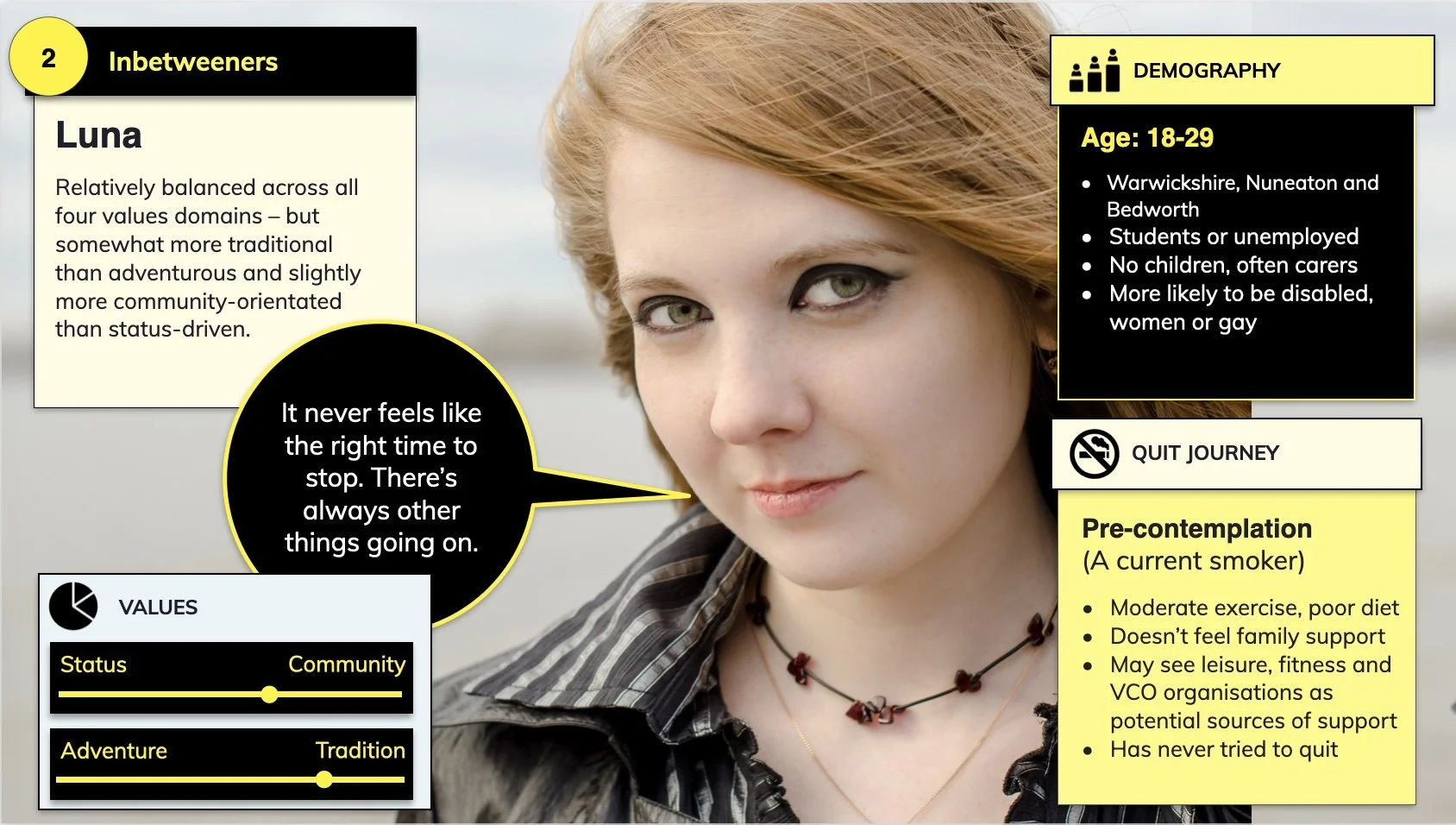
A person’s values drives their behaviour, so the team opted to use the Portrait Values Questionnaire (PVQ) at the heart of their approach. This widely recognised values framework enabled us to create data-driven profiles of particular subsets of a given group, in this case smokers, according to the values they share.
Research participants were asked to complete a survey and our data analysis enabled Social Engine to identify three segments that shared similar values, as well lifestyle and other demographic characteristics, such as geography or age. These groups, Independents, In-betweeners and Traditionalists were fleshed out with insights from focus groups that enabled us to create vivid and fully realised target profiles.
Identifying gaps: professionals and peer support
The Project Board identified two potential gaps in support: professionals, including GPs, pharmacists, social workers and other frontline teams, and peer support networks – families and friends of the quitter, who have the potential to provide support along the quit journey.
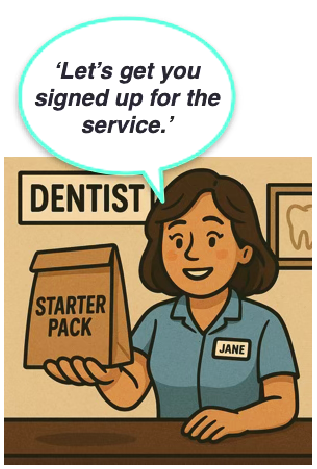
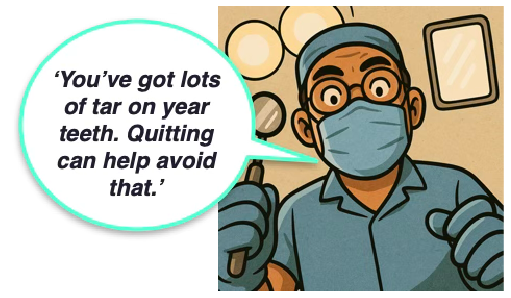
For professionals we showed how carefully designed messaging and interventions, such as friendly advice from the doctor’s receptionist, could provide reassurance from relatable authority figures. Integrating these players into planning around customer journeys could be highly beneficial in increasing authority, reach and salience of stop smoking messages.
Help someone you love quit smoking for good
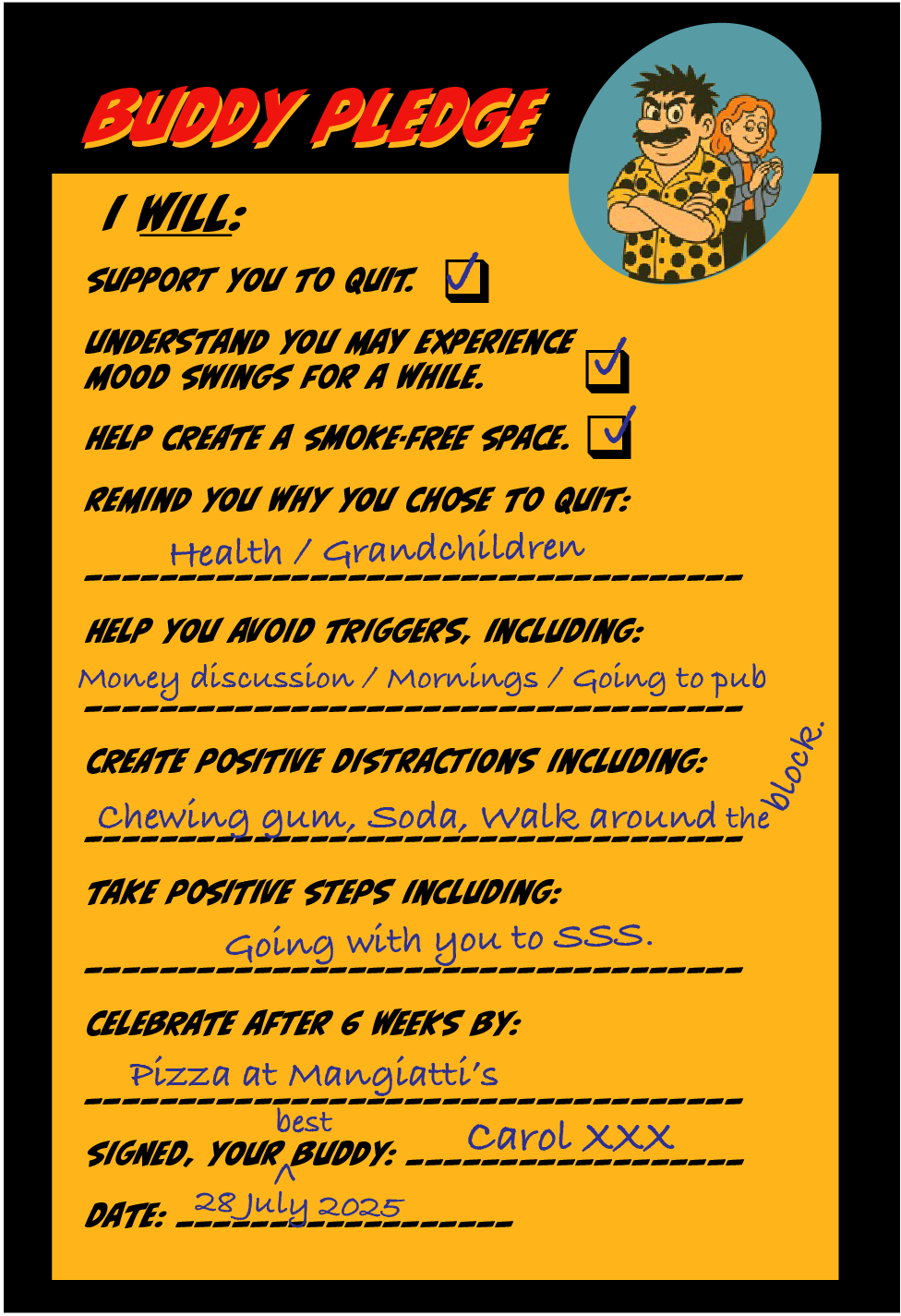
The Quit Buddy is a friend or relative who agrees to help the quitter on their journey. The goal is to give the Buddy the tools they need to be an effective ally, including knowing when and how to intervene, helping to understand irritability and cravings, helping to make lifestyle changes and providing motivational moments for the quitter, including completing a Pledge Card, which serves as a shared ‘commitment device’.
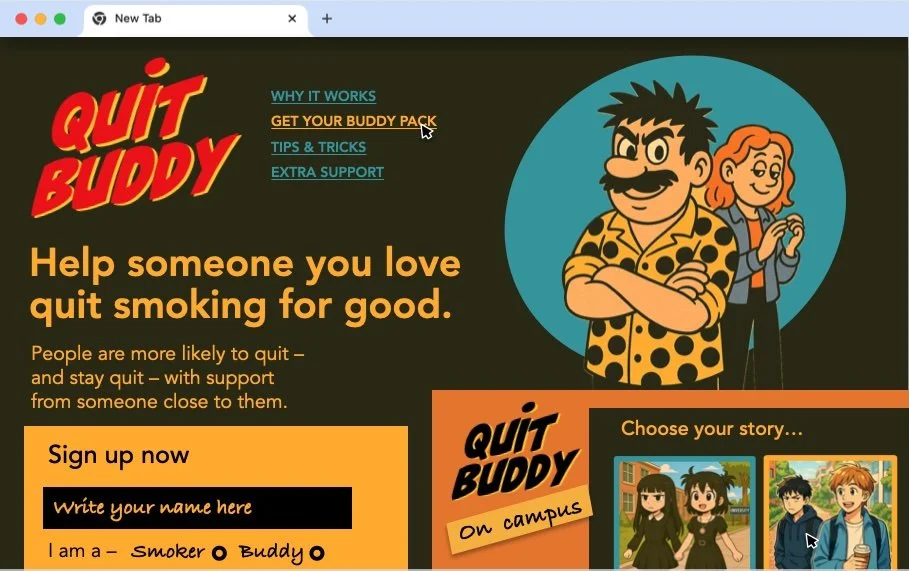
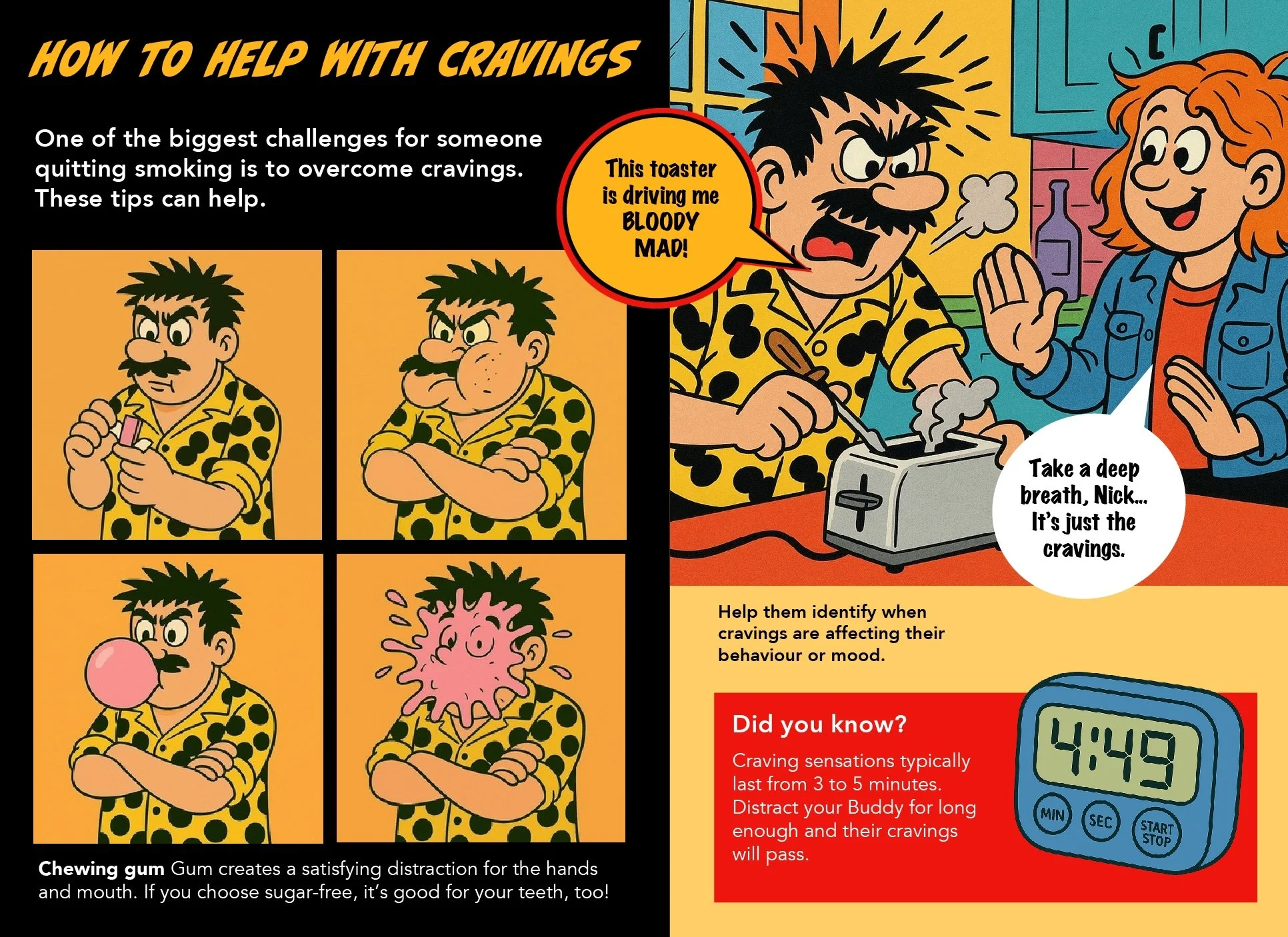
The Buddy experience would be supported with a booklet, pledge card and a targeted website, which supports learning and engagement providing useful insights conveyed with relatable humour.
How to protect young people from vaping
Explore our project for Coventry and Warwickshire which uses research and insights to design new ways to support young people who vape.