

Drawing on ideas of surveillance and exchange, Social Engine’s behavioural intervention for New Forest District Council led to a 29% drop in one month in the amount of litter the Council needed to collect.
People will drop less litter if you offer something in return – while also creating the sense that someone is watching


Client
The LGA, on behalf of New Forest District Council.
The brief
Work with the Council to undertake research into people’s littering behaviours and identify opportunities for interventions that will significantly reduce this anti-social behaviour.
Key insight
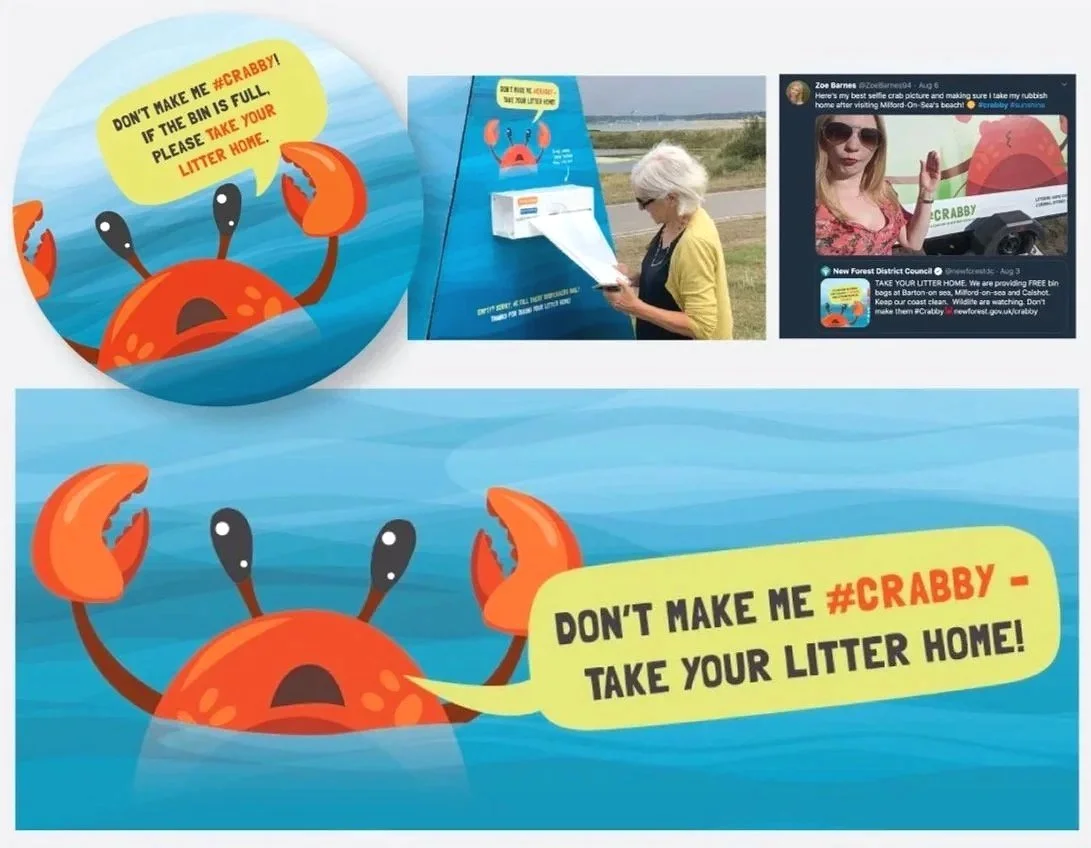
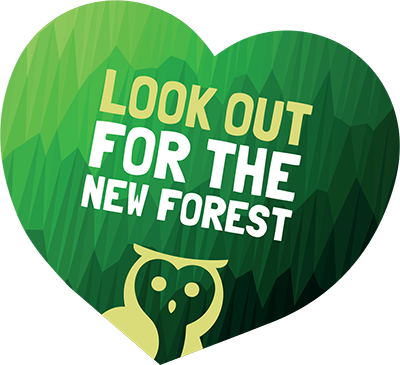
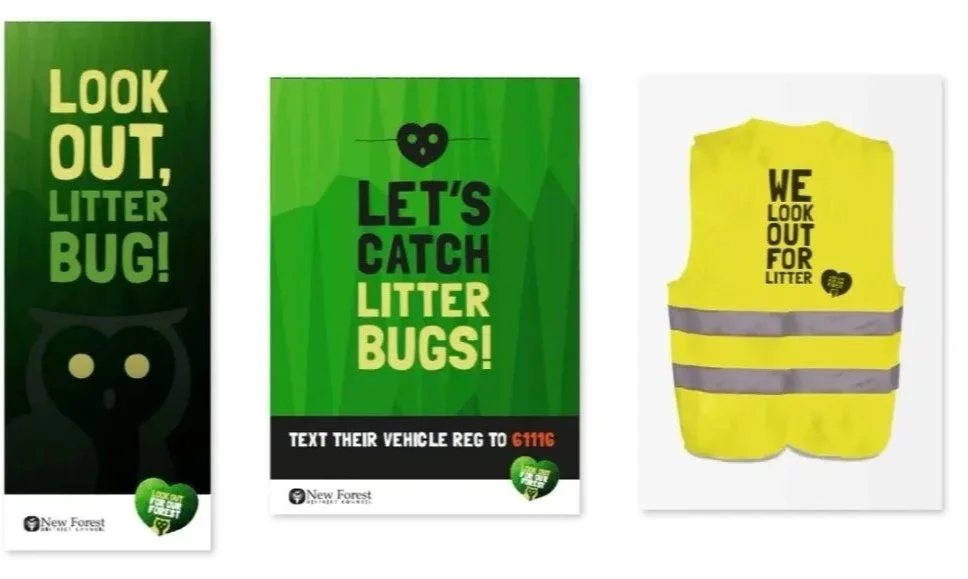
Littering is a ‘dirty secret’ – most people disapprove of littering but some might do it if they felt no-one was watching. So ideas of being watched permeated the campaign: we established ‘Look out for our Forest’ as the council’s anti-littering framework brand, while our brand mascots – a forest owl and a crab called Crabby – had visually prominent eyes.

The South West has some of the least energy efficient homes in the country, so residents are wasting significant sums of money through lost heat, while also being vulnerable to energy price shocks.
A consortium of six councils in the South West saw the opportunity to explore behaviour change theory as a solution to tackling the low uptake of retrofitting measures. This project was run as part of the LGA’s behavioural insights programme.
The councils commissioned Social Engine to design a behavioural intervention that would achieve positive change. At the same time we wanted to lead the councils through the design process with the wider aim of empowering them to incorporate behavioural insights into their future work.
This process identified loft insulation as a key area for improvement. The research showed there was a significant mismatch between people feeling their homes had sufficient insulation, versus what they actually needed, revealing significant misconceptions. We trialled some campaign variants on social media to explore which would be most effective in challenging these ideas.
Four out of six homes don’t have enough loft insulation
To help us understand which behavioural driver would be most effective in this context, we compared a campaign variant focused on social norms with one centred on loss aversion, in this case, saving money: ‘You could be losing money through your loft.’
We found that the intervention variants focusing on social norms were 20% more effective at eliciting user clicks compared to those which centred on loss aversion, suggesting that addressing social norms around loft insulation would be a key way of driving change.
We explored a range of treatments for the intervention design
10 tonnes
Adverts focused on social norms were 20% more effective than those focused on loss aversion by saving money.
At the same time, we trialled different visual treatments – a simple descriptive image of a roof versus a surreal image of a mackerel, serving an an indicator of the depth of insulation needed. We found that that the visual with the roof elicited more clicks, suggesting it that people perceived clear, actionable information.
Buzz and reach
But the mackerel intervention attracted a higher number of use comments, creating more ‘buzz’ with the potential for wider reach. This suggested that surprise, greater salience and ‘talkability’ would support effective awareness-raising.
The lessons learned from the trial, as well as techniques used during the programme, will enable the participating councils to use behavioural insights for this and other complex behavioural problems going forwards.
Want to know more?
You can read the full report on the LGA’s website.