

We can support tenants better if we understand their values
If we group residents according to their values – rather than by demographics or housing tenure – we can engage them in productive new ways.

Client
Catalyst Housing Group, now part of Peabody.
The brief
To create evidence based personas that will help housing staff find new ways of engaging with residents.
Key insight
If we group residents according to their values – rather than by demographics or housing tenure – we can reach them in productive new ways.

Housing associations have traditionally understood their customers in terms of demographics or housing tenure – older tenants, shared owners, and so on.
But we know there are significant limitations to this approach. For one, it’s very broad-brush. Simply knowing if someone is a shared owner doesn’t tell us much about how they will respond to changes in housing management, improvement plans or initiatives around community engagement.
What we do know is that people’s behaviour is driven by their values: whether they like to try new things or instead tend to hold on to traditional values, appreciating stability or continuity; or whether they are community-minded, valuing their neighbours or individualistic, preferring to focus on things like career progression and making their way in the world.
This different way of thinking about residents opens up the potential for more vivid, understandable and relatable ways of thinking about residents, which in turn has the potential to serve as a foundation for thinking about innovative new products, services and forms of communications and engagement.
Social Engine worked with the Catalyst team to create a series of evidence-based personas that would enable this fresh new way of thinking about residents and how best to engage them.
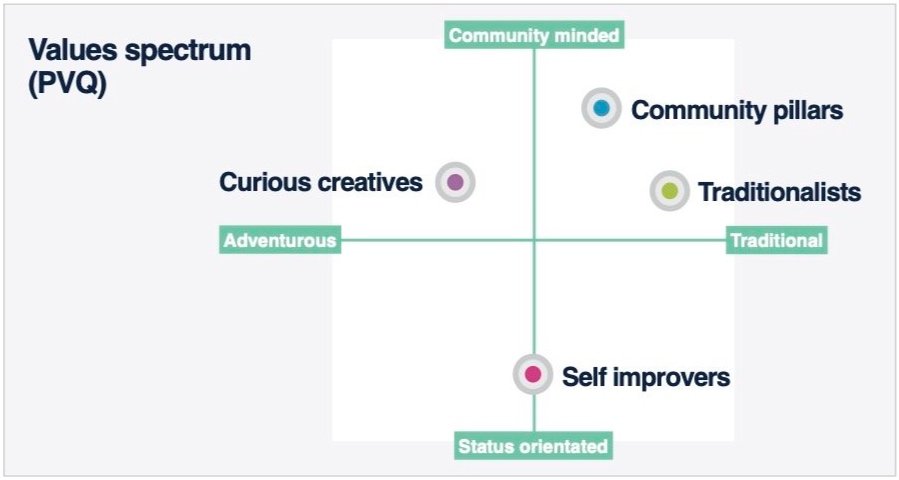
Four ‘values groups’ were identified through the data, which were visualised as a series of distinctive personas. These were then enriched by evidence from the focus groups.
Robust, evidence-based modelling of groups with shared individual values
To help model this new approach, Social Engine’s research team drew on the Portrait Values Questionnaire (PVQ), a well established and widely recognised values measurement framework.
The team undertook an extensive survey using the PVQ values framework at its core. This created a substantial body of evidence that enabled the team to model a series of four personas that reflected the values of Catalyst residents. These data-driven personas were then enriched through a series of segmented focus groups to establish how clusters of people with similar values profiles tended to see the world, with a focus on their homes and communities.
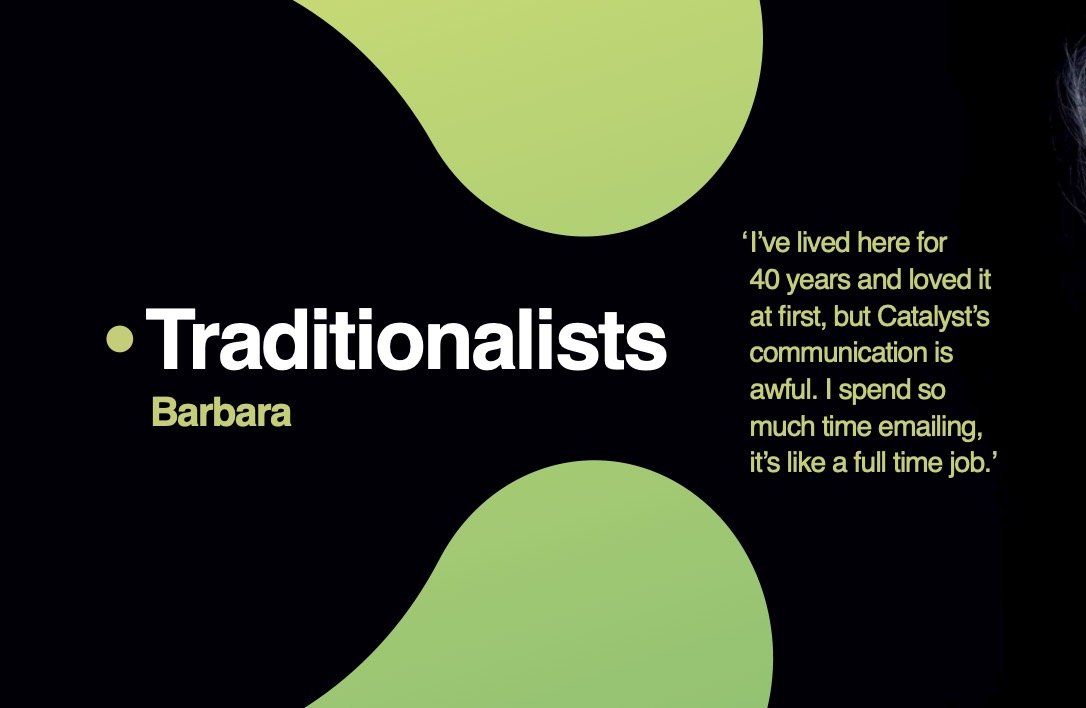
Four different values groups emerged from the research:
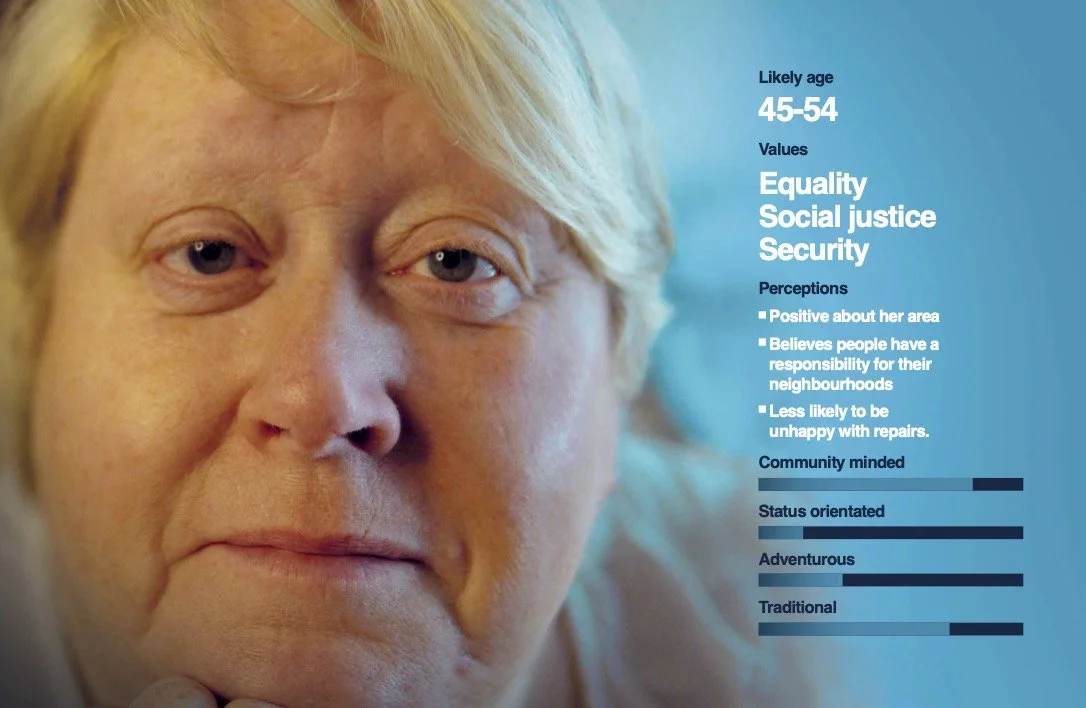
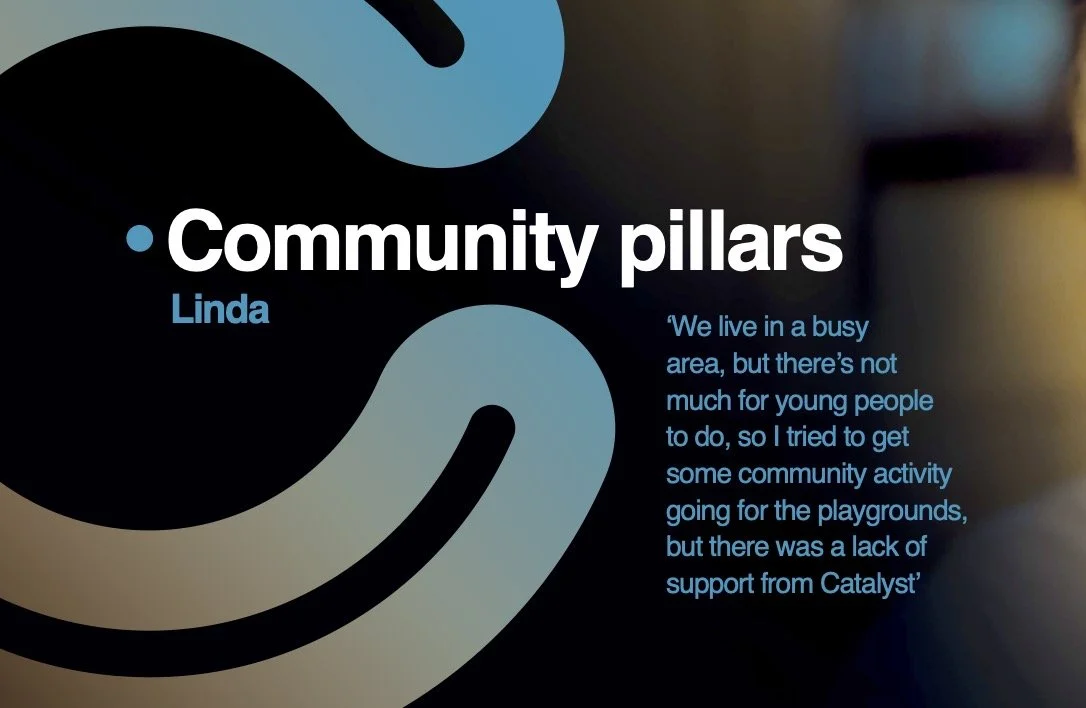
Community Pillars
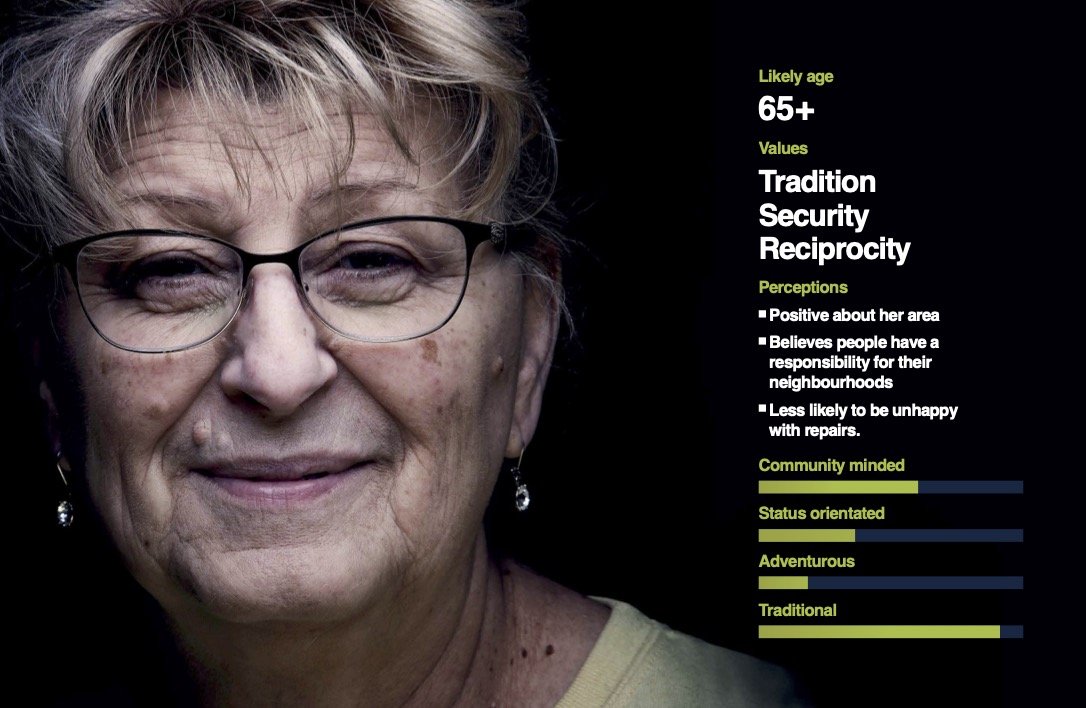
Traditionalists
Curious creatives and
Self-improvers.
These rich, values based personas provided an invaluable tool for the team to use when thinking about key areas of their work, from sales, to tenant engagement to repairs, to complaints and service delivery.
Since anti-social behaviour among young people was a key concern, we extended the successful first phase to create a series of youth personas, empowering the team with an understanding of what motivates young people and how best to design services that will resonate.




The PVQ has given us a brilliant new tool for thinking about service delivery across the board, from housing sales to community engagement, and from repairs to how we involve young people.’
- Jacqueline Macron, Director of Services and Customer Engagement